Phillis Wheatley made me think differently about inheritance. Her poetry suggested that a tradition does not become yours because an institution tells you that you belong within it. It becomes part of your inheritance through the work of knowing it, interpreting it, questioning it, and carrying it forward.
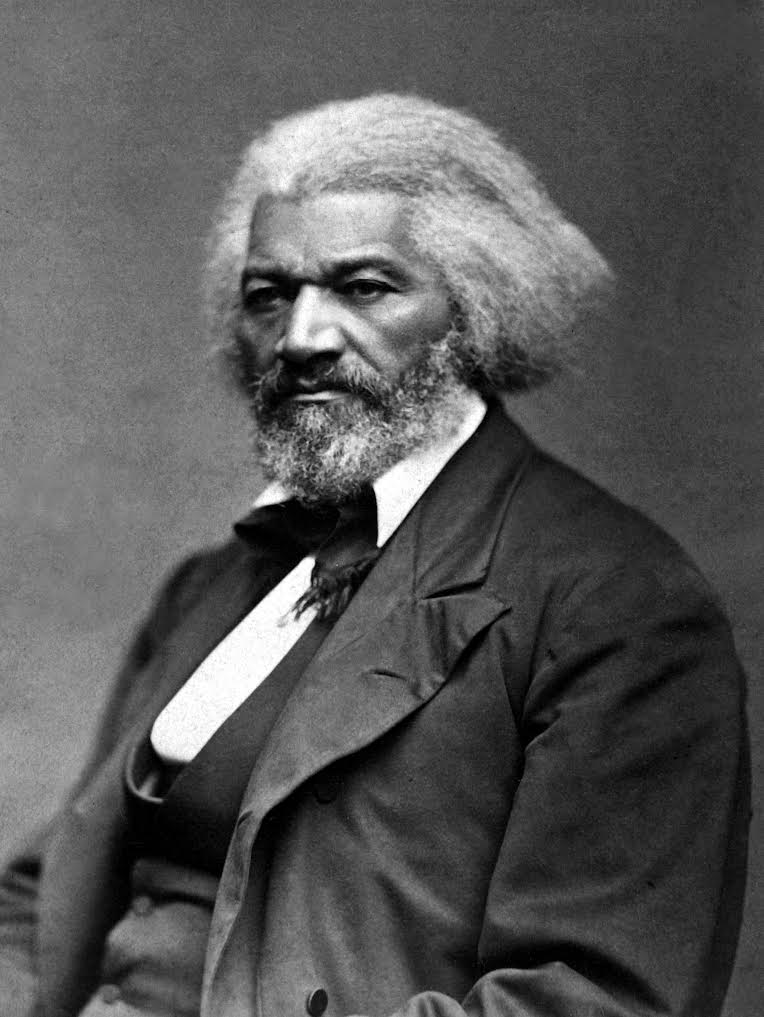
But that idea raised another question for me: What happens when the civilization we inherit gives us things that cannot all be carried forward together? Traditions do not arrive neatly. They contain achievements and failures, principles and practices, ideals and contradictions. If inheritance means more than preservation, then an inheritor must eventually decide what deserves allegiance, what requires criticism, what must be transformed, and what should not be transmitted at all. Frederick Douglass offers one answer.
In 1852, Douglass delivered his famous address, “What to the Slave Is the Fourth of July?” before an audience celebrating American independence. The occasion centered on some of the most powerful ideas in the American political tradition: liberty, equality, natural rights, self-government, citizenship, and resistance to tyranny. Douglass did not dismiss those principles because America had failed to live by them. Nor did he accept everything the nation had inherited simply because it came wrapped in the authority of tradition. He distinguished between the principles worth preserving and the practices that betrayed them. That act of judgment is what makes the speech so powerful.
America told a particular story about itself. It was a nation born in resistance to tyranny. Its founders had declared that human beings possessed rights government could not simply take away. Its political identity depended upon the idea that liberty was not a privilege granted by rulers, but something more fundamental. Yet slavery existed inside that same republic. A country that celebrated freedom held millions of people in bondage. A nation that condemned tyranny exercised extraordinary power over the bodies, families, labor, and futures of enslaved people. A political tradition that spoke in universal language applied its promises selectively. Douglass therefore inherited more than an ideal of liberty. He inherited a contradiction between liberty and slavery, and he refused to pretend that both deserved preservation.
Douglass was not simply asking whether Black Americans should be included in an existing political tradition. He was claiming the authority to interpret that tradition for himself and to judge among the things it had handed down. He could look at the Declaration of Independence and ask which parts of the American inheritance expressed principles worth carrying forward. He could look at slavery and ask whether age, law, custom, or institutional power could make injustice worthy of preservation. He could hear a civilization describe itself in one language and compare that language with the reality it had created. In that sense, Douglass expands the meaning of inheritance.
Phillis Wheatley showed that an inheritor does not need permission to participate in a tradition. Douglass shows that participation creates another responsibility: an inheritor cannot simply preserve everything received. We often imagine inheritance as taking possession of something valuable, protecting it, and passing it forward. But civilizations do not hand us only treasures. They also hand us exclusions, failures, prejudices, and unresolved contradictions. Inheritance therefore requires judgment.
What if receiving a tradition means deciding which parts of it deserve loyalty and which demand resistance? Douglass suggests that criticism does not necessarily place someone outside a civilization. Sometimes criticism may be one of the clearest signs that someone has taken the civilization seriously. He did not challenge American liberty because liberty meant nothing to him. He challenged America because liberty meant too much to allow slavery to inherit the same legitimacy. His criticism was therefore more than an accusation of hypocrisy. It was an act of selection: liberty deserved allegiance; slavery did not.
Judgment does not confuse loyalty with silence. It does not assume that respect requires obedience, or that everything old deserves preservation simply because it has survived. And it does not grant institutions exclusive authority to decide which parts of an inheritance future generations must accept. An inheritor can ask harder questions: Which principles remain worthy of us? Which practices contradict them? What have institutions preserved that should instead be challenged? What have they taught us to accept merely because earlier generations accepted it?
And perhaps most importantly: Who has the authority to make those judgments? Douglass’s answer seems clear. Anyone who genuinely inherits a tradition also acquires responsibility for examining what has been received. Some parts may deserve admiration. Others may require criticism. Some may need reinterpretation or repair. And some things should not be transmitted at all. This is where Douglass extends the question I began asking through Wheatley.
Wheatley made a claim to cultural inheritance by entering the classical tradition and changing what it could mean. Douglass made another kind of claim. He entered America’s political tradition deeply enough to distinguish between the ideals he believed deserved continuation and the institutions that violated them. The two acts are different, but they share something important. Neither Wheatley nor Douglass allowed existing institutions to determine the limits of their intellectual authority. Wheatley claimed the right to participate. Douglass claimed the responsibility to judge.
It seems this is what inheritance ultimately demands. We do not inherit only a civilization’s achievements. We inherit its unfinished arguments, its contradictions, its promises, and its failures. We inherit things worth preserving beside things that should never have been preserved at all. As a result, carrying civilization forward cannot mean carrying everything forward unchanged. It requires judgment: deciding what deserves allegiance, what requires criticism, what must be transformed, and what should be left behind.
To inherit civilization is not simply to receive it. It is to become responsible for deciding what deserves to become part of what comes next.
Sources & Further Reading
- Frederick Douglass, “What to the Slave Is the Fourth of July?” (1852).
- Frederick Douglass, Narrative of the Life of Frederick Douglass, an American Slave.
- David W. Blight, Frederick Douglass: Prophet of Freedom.
- The Declaration of Independence.


Leave a Reply