When I was in seventh grade, I learned something that completely changed how I thought about history. Like millions of people, I had heard the phrase “Et tu, Brute?” It seemed like one of those facts everyone simply knew. It appeared in books, movies, classrooms, and everyday conversation. Then I discovered that Julius Caesar probably never said those words at all. The famous quotation comes not from the historical accounts closest to his assassination, but from Shakespeare’s dramatic retelling centuries later.
That discovery stayed with me. It wasn’t simply that a playwright had taken creative liberties. It was realizing how easily repeated stories become accepted as truth. If one of history’s most famous quotations could become part of our collective memory without being historically certain, what other assumptions had I accepted simply because they were familiar?
That question eventually became many questions. Who decides which stories survive? Who decides which voices are remembered? Why do some civilizations become central to the way we understand history while others receive far less attention? And perhaps the question that has come to define much of my work:
Who gets access to civilization?
My own journey into that question has been shaped by moving through very different worlds.
I was born and raised in Tribeca, educated on Manhattan’s Upper East Side, and today call Harlem home. Those neighborhoods are only a few subway stops apart, but they often offer very different experiences of education, culture, history, and opportunity. Growing up between them taught me that access is rarely just about distance. More often, it is about who is invited into particular conversations, and who is expected to find their own way there.
I never imagined that I would begin exploring those questions through Latin. The deeper I studied classical languages and ancient history, the more I realized that classics is about much more than translating old texts. It is a conversation about power, memory, education, identity, persuasion, and the ways societies decide which ideas deserve to endure. Although the ancient world feels distant, the questions it raises remain surprisingly familiar. Who deserves an education? Who has the right to speak? Whose stories become part of history? Who gets left out?
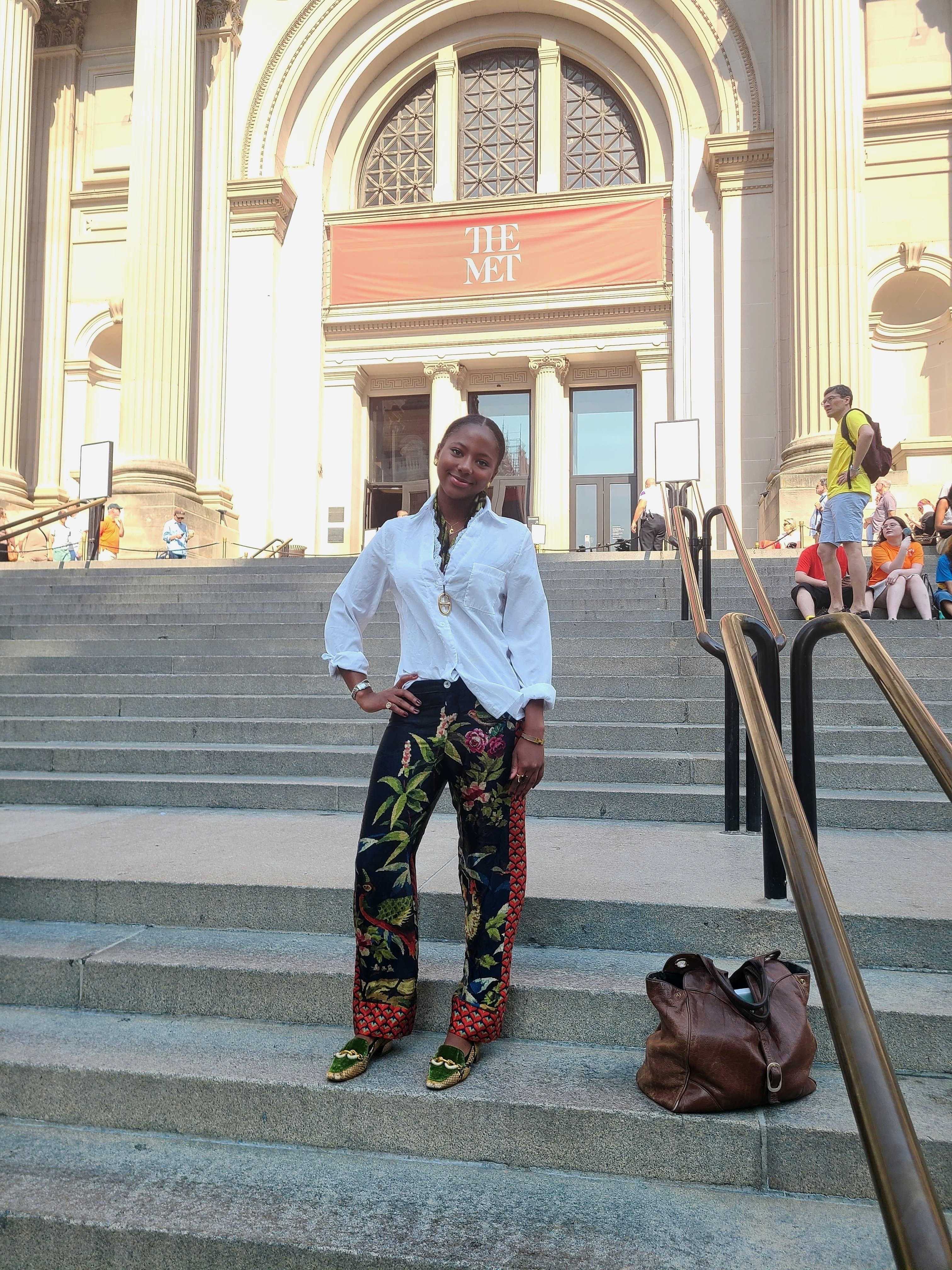
Outside the classroom, I found myself asking those same questions in very different settings. As a research assistant at the Metropolitan Museum of Art, working on the Africa & Byzantium exhibition, I saw how museums shape the public understanding of history. As a near-peer tutor at Sisulu-Walker Charter School of Harlem, the oldest charter school in Harlem, I worked with middle-school students whose curiosity reminded me that talent is everywhere, even when opportunity is not. Developing lesson plans that connected museum scholarship with Harlem classrooms showed me that making knowledge accessible is not simply an educational goal. It is an act of expanding who gets to participate in our shared intellectual inheritance.
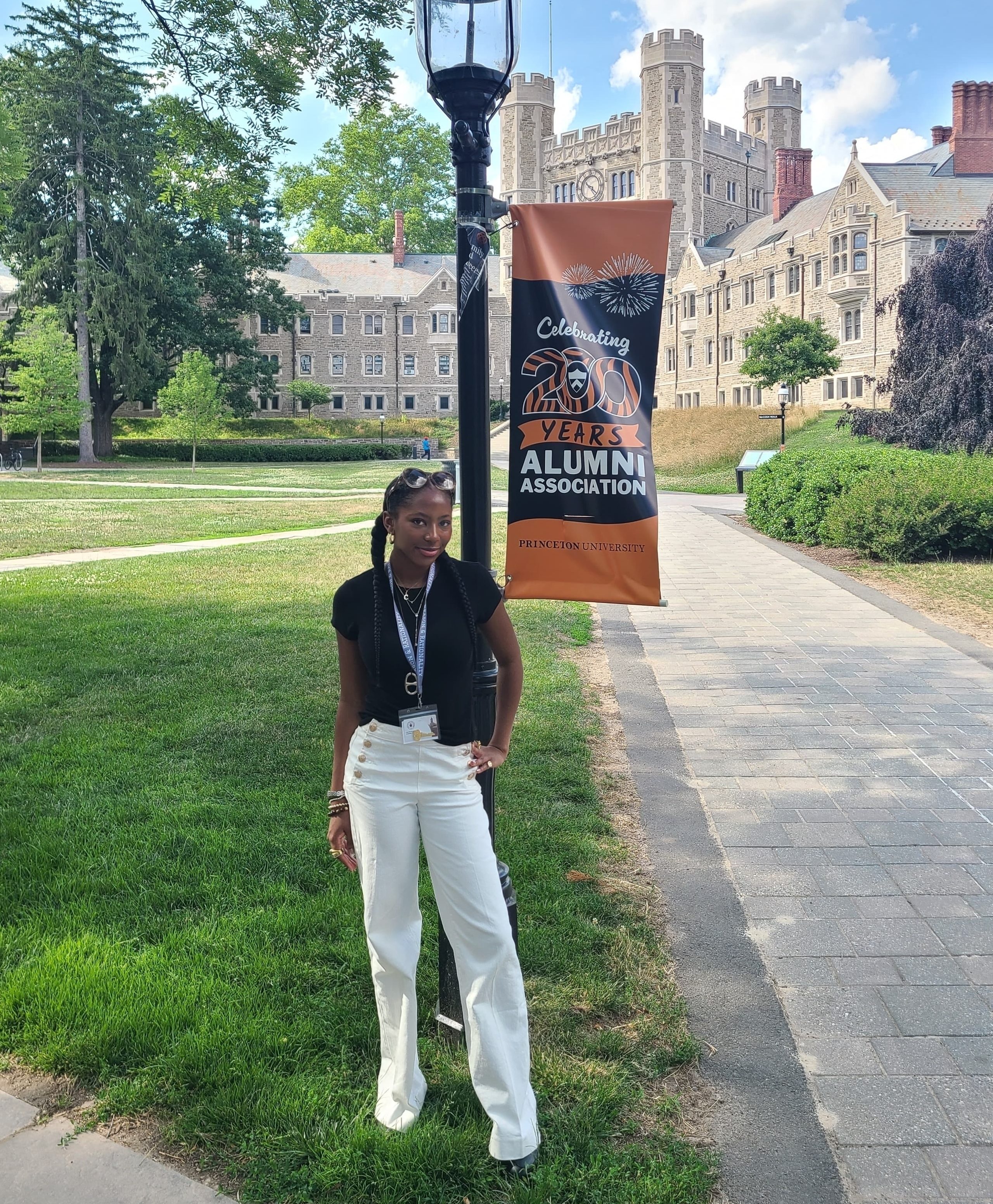
Another influence on my thinking has been rhetoric. Through Model Congress, where I learned to argue ideas rather than simply repeat them, and later through Princeton University’s Reason & Rationality Institute, where philosophy and debate became tools for examining assumptions instead of defending them, I discovered that the best questions are often more important than the quickest answers. History, like rhetoric, requires us to examine evidence carefully, challenge inherited narratives, and remain willing to change our minds when the evidence points somewhere new.
This blog brings those experiences together. Here you’ll find essays on the ancient world, museum scholarship, historical memory, rhetoric, education, and the ways classical traditions continue to shape modern society. Some posts explore Rome, Greece, Byzantium, and ancient Africa. Others ask why certain histories become familiar while others fade from public memory, and what happens when new voices enter old conversations.
I don’t believe everyone needs to study Latin. I don’t believe classical civilization belongs to one culture, one institution, or one kind of student. What I do believe is that every discipline becomes stronger when more people are invited to ask meaningful questions. New perspectives do not weaken the study of history. They deepen it.
In many ways, this is the perspective of a Harlem girl learning to navigate the classical world. Not as an outsider looking in, but as someone discovering that the classical tradition has always been larger, more diverse, and more connected to our present than I first imagined.
If these essays have a single purpose, it is to encourage curiosity. To question inherited assumptions. To look beyond familiar narratives. And to remember that education is not simply about receiving knowledge, but about learning how to examine it critically.
Because every generation inherits stories from the one before it. The more interesting question is who gets invited to inherit them.
I hope you’ll join the conversation.
 Classical Mosaic