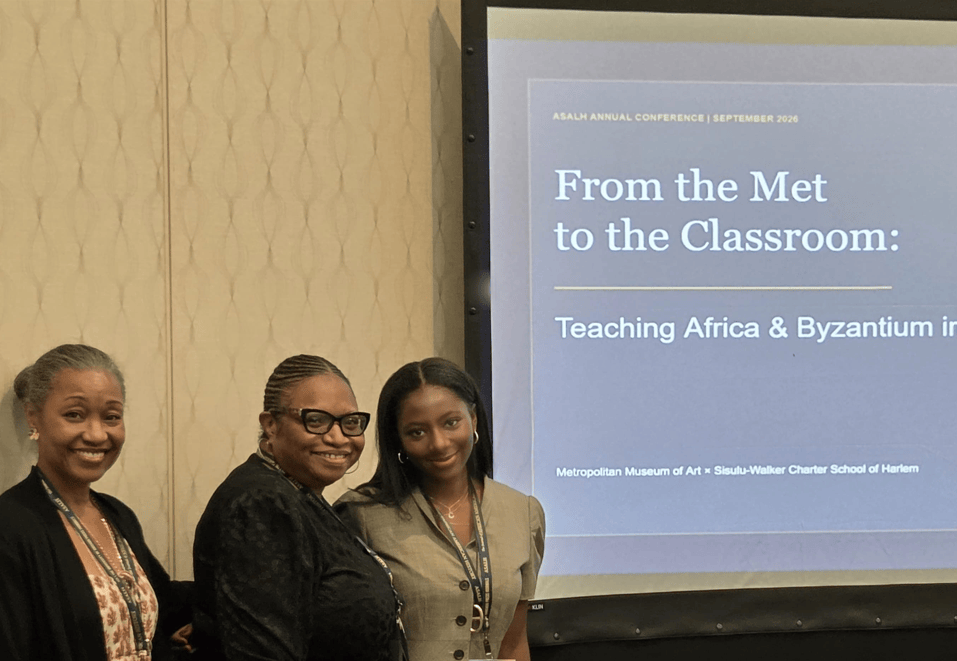
Last summer, while working as a research assistant on the Metropolitan Museum of Art’s Africa & Byzantium exhibition, I began thinking about a question that has stayed with me ever since: Who gets included in the stories we tell about civilization?
Before encountering the exhibition, I had often imagined Byzantium through the familiar geography of Constantinople, the Mediterranean, and the eastern Roman Empire. Africa & Byzantium complicated that picture. It showed a world connected across North and East Africa, the Mediterranean, and the Byzantine Empire through religion, art, trade, politics, and movement.
The exhibition made me realize that the boundaries separating civilizations can sometimes tell us as much about the way history has been organized as they do about the past itself. That realization eventually took me from the galleries of the Met to a classroom in Harlem.
From Research to Teaching
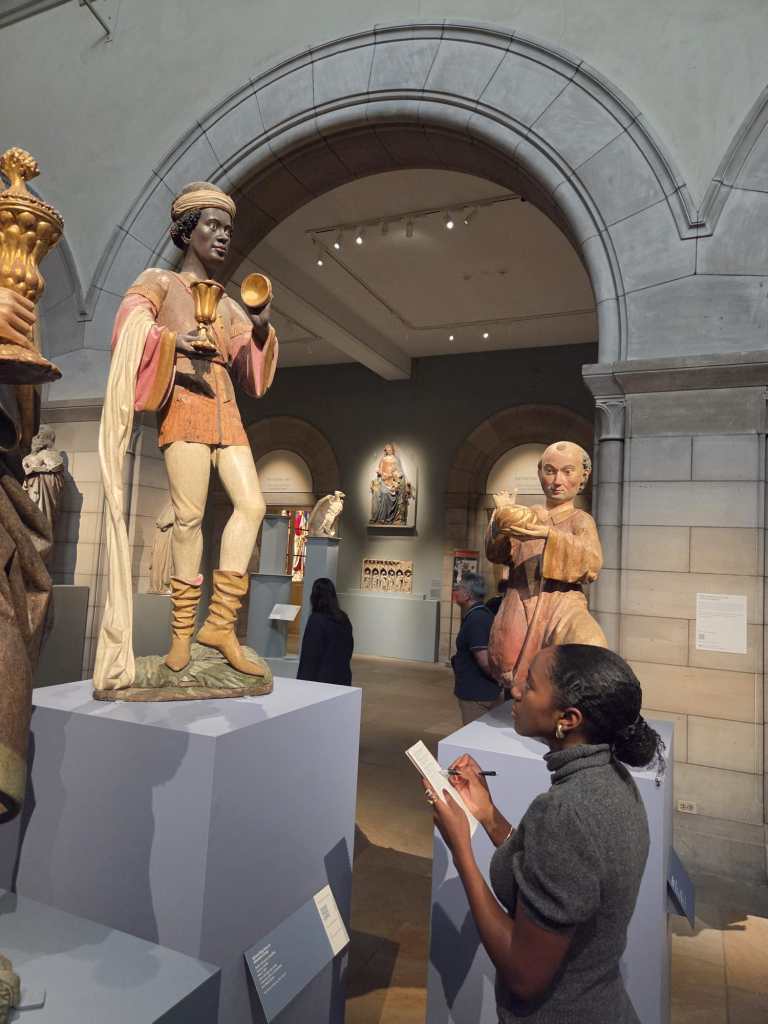
I developed a lesson plan that asked students to explore Africa and Byzantium not as isolated worlds, but as interconnected ones. Rather than simply presenting objects and dates, I wanted students to ask why certain relationships become central to historical narratives while others become less visible.
Teaching the material changed my own understanding of it. Explaining a subject to younger students forces you to decide what matters. Which objects do you show? Which connections do you emphasize? Which words do you use to describe a civilization? What background knowledge do you assume? Those decisions may seem small, but together they shape the history another person
receives. I began to see education itself as a form of cultural transmission.
Taking the Project to ASALH
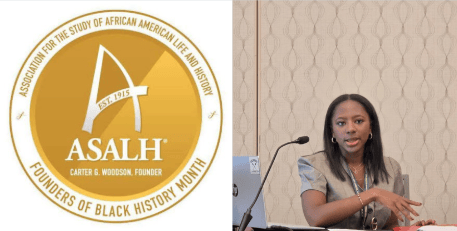
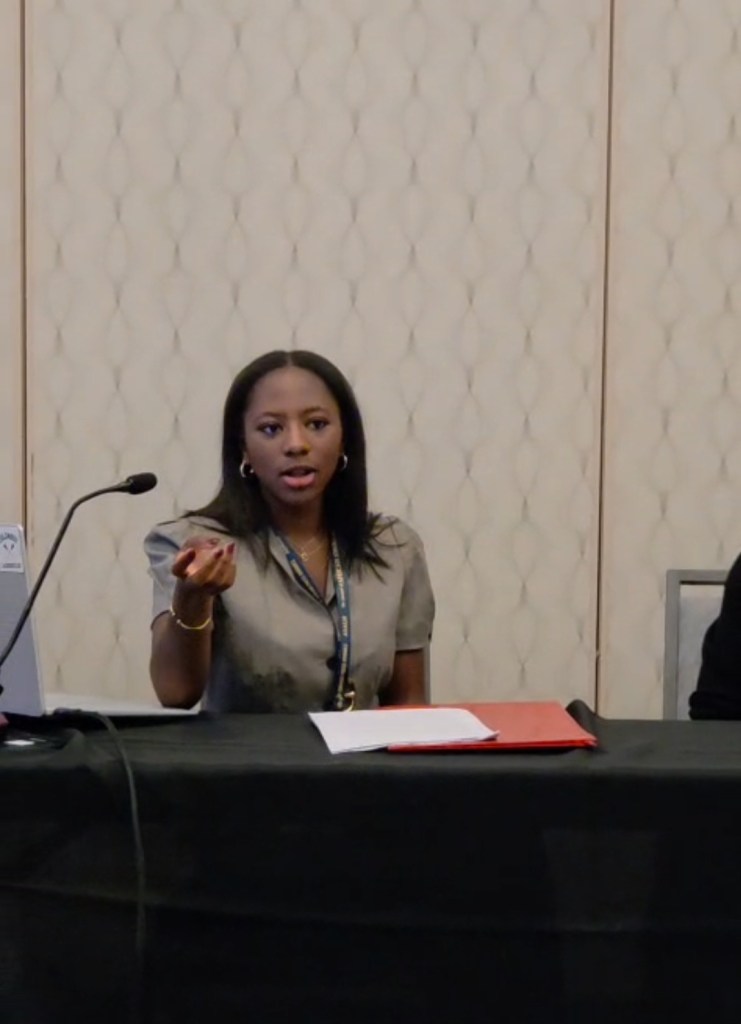
In September, I had the opportunity to present this project through the Association for the Study of African American Life and History (ASALH) as part of a discussion about taking the story of Africa & Byzantium from the museum into a Harlem classroom.
Presenting the project to an audience outside my school forced me to articulate something I had previously understood mostly through experience: museums and classrooms do more than preserve and transmit history. They also help organize it. A museum determines which objects appear beside one another. A curator determines which relationships an exhibition emphasizes. A teacher
determines which stories students encounter. A textbook determines which events receive chapters and which receive paragraphs. None of those decisions individually determines what civilization means. But collectively they have enormous influence over what later generations come to recognize
as their cultural inheritance.
From Access to Inheritance
My experience with Africa & Byzantium also made me think differently about access. Access can mean physically entering a museum or classroom. But there are other kinds of access. There is intellectual access: being given the knowledge necessary to understand a tradition. There is interpretive access: being treated as someone entitled to form an opinion about it. And there is cultural access: being able to see yourself as one of the people to whom that history belongs. These forms of access are not always distributed equally.
That raises a larger question for me. If civilizations survive because successive generations study, preserve, question, reinterpret, and teach them, then what actually makes someone an inheritor? Is inheritance determined by ancestry? Geography? Institutional recognition? Education? Or does serious engagement with a tradition itself create a claim upon it?
The Question I Am Taking Forward
The journey from the Met to a Harlem classroom and then to ASALH changed the way I think about museums and education. I began the project interested in how Africa fits into the history of Byzantium. I ended it asking something larger: If institutions help determine which histories we inherit, who has the authority to decide who belongs within the story of civilization? That question will guide the next series of essays on Classical Mosaic, Claiming Civilization.
The first begins with Phillis Wheatley, an enslaved African woman who mastered the language and literature of the classical tradition and, in doing so, raises an even more provocative possibility: Perhaps inheritance is not always something an institution gives you. Sometimes it is something you
claim.
Explore the Project:
https://convention2.allacademic.com/one/asalh/asalh26/online_program_direct_link/view_session/2364014/
ASALH Presentation Video Clip: https://drive.google.com/file/d/1OgXcL1HgkLStLm0booMcXlY9Ob19XEY6/view?usp=sharing
ASALH Presentation: From the Met to a Harlem Classroom: https://docs.google.com/presentation/d/1x-df-_YghWBj0xqwjPuzNfS_ohA8nX0o/edit?usp=sharing&ouid=108414461569043401534&rtpof=true&sd=true
Africa & Byzantium Lesson Plan: https://drive.google.com/file/d/1FU2DiohOb0LiXbCx5V_KzQMa-4wMTUN2/view?usp=sharing
The Metropolitan Museum of Art: Africa & Byzantium: https://www.metmuseum.org/exhibitions/africa-byzantium
Further Reading: https://www.journals.uchicago.edu/doi/full/10.1086/733893 https://www.howardgardner.com/synthesizing/africanbspand-byzantium-reflections-on-a-proposed-new-synthesis-33 https://artandarchaeology.princeton.edu/what%E2%80%99s/news/africa-and-byzantium-lecture-and-exhibition


Leave a comment