For a long time, when I heard the word “classicist,” I pictured someone very specific: an older white man surrounded by shelves of books, translating Greek and Latin in a university office.
My own journey into classical studies was not straightforward. It left me with an uncomfortable question: Was I borrowing someone else’s cultural inheritance, or could I claim it as part of my own? The question became harder because I genuinely loved what I was studying. I loved Latin: the difficulty of translation, the precision of grammar, and the satisfaction of discovering meaning hidden beneath unfamiliar words. I loved tracing an idea from an ancient text into a painting, a political argument, or a modern poem. Most of all, I loved the questions. Still, I wondered why a tradition described as foundational to “Western civilization” could sometimes feel as though it came with an invisible list of rightful heirs.
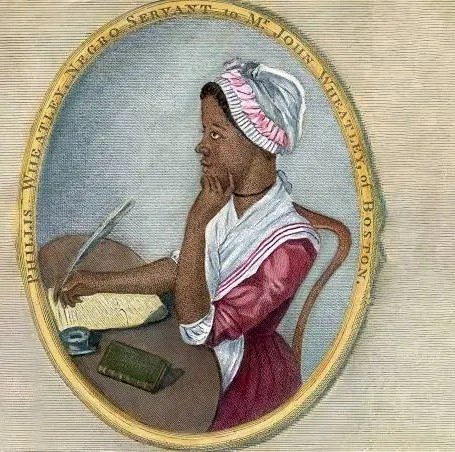
Then I encountered Phillis Wheatley. Wheatley arrived in Boston as an enslaved African child and became one of the most remarkable poets of eighteenth-century America. Her 1773 collection, Poems on Various Subjects, Religious and Moral, appeared with an extraordinary attestation: prominent white men certified that she had actually written the poems. The document helped make publication possible, but it also exposed the absurdity of the system surrounding her. Wheatley had produced the poetry. Institutions still claimed the authority to decide whether readers should believe she was capable of producing it.
What interests me most is what those institutions could not decide. They could influence whether Wheatley was published, circulated, taught, or believed. But they could not determine what Homer, Virgil, Ovid, or the Muses meant to her once she began using them.
I think of that as a form of cultural sovereignty: the right to decide how a cultural tradition enters your own intellectual and creative life without waiting for an institution to grant permission. Cultural sovereignty does not mean owning the classics, nor does it mean every interpretation is correct or beyond criticism. It means that no institution possesses exclusive authority to decide who may form a meaningful relationship with a tradition.
Wheatley exercised that right repeatedly. In “To Maecenas,” she moves among Homer, Virgil, Horace, the Muses, and Terence, the African-born Roman playwright. She does not merely display her knowledge of them. She chooses her predecessors, judges what matters in their work, and places herself within their literary conversation. When she reaches for the poet’s laurel, she is not admiring the tradition from outside. She is making a claim upon it.
In “Niobe in Distress,” Wheatley brings together Ovid, Alexander Pope, and Richard Wilson’s painting and transforms their material into something new. She shifts our attention toward human suffering and a grieving mother, showing that inheritance is not passive repetition. An inheritor receives a tradition and changes what it can mean.
In “On Recollection,” Wheatley invokes classical memory while calling herself “Afric.” Africa is not standing outside the classical world looking in. Wheatley places an African voice inside the process of remembering, interpreting, and transmitting the past.
I no longer think Wheatley was simply borrowing from the classics. She was claiming a cultural inheritance. She claimed it not because someone certified her right to do so, nor simply because she admired Greece and Rome. She claimed it through sustained participation: learning the tradition, interpreting it, questioning it, transforming it, and sending it forward.
The distinction matters. Institutions can regulate access. They can decide what gets published, taught, preserved, displayed, or called canonical. They can make an inheritance visible or nearly invisible. But they cannot create the intellectual relationship itself.
Wheatley did not become an inheritor when Boston elites certified her authorship. Her inheritance was already visible in what she knew and, more importantly, in what she did with that knowledge. This realization changed the question I had been asking about myself. Perhaps I did not need to determine whether the classics were originally intended for someone like me. Ancient Romans certainly did not imagine a Black girl in twenty-first-century Harlem struggling through Latin homework or writing essays about Homer. But civilizations outlive the people who create them.
They survive because later generations study their ideas, argue with them, reinterpret them, and carry them somewhere new.
Knowledge is not private property. Curiosity does not recognize racial boundaries. And cultural inheritance does not require ancestry or institutional permission.
Wheatley taught me that the gatekeepers of a tradition are not the same as its owners. Institutions can shape who gains access and whose contributions are recognized, but they cannot fully control who becomes an inheritor.
Perhaps inheritance begins at the moment we stop asking whether a tradition was meant for us and begin asking what we will make of it.
Sources & Further Reading
Phillis Wheatley, Poems on Various Subjects, Religious and Moral (1773), especially “To Maecenas,” “Niobe in Distress,” and “On Recollection.”
Henry Louis Gates Jr., The Trials of Phillis Wheatley.
Emily Greenwood, “The Politics of Classicism in the Poetry of Phillis Wheatley.”
Tracey L. Walters, African American Literature and the Classicist Tradition.
Dan-el Padilla Peralta, Classicism and Other Phobias.


Leave a Reply